The AI bubble has burst in China. AI tech stocks were 42% of China’s market capitalization. And the crash is on in China. This is why Anthropic is trying to get their IPO done – to steal from people who don’t know any better.
In the US, AI-linked and core tech stocks account for roughly 42% to 62% of the S&P 500’s total market capitalization, depending on the scope of companies included:
• Core AI-Linked Companies: A broad analysis of 218 AI-associated companies represents 62.04% ($42.39 trillion) of the S&P 500’s total market value.
• Core Software, Chips & Infrastructure: A tighter group of 58 direct AI-building companies (chips, models, software, security) accounts for 47.13% of the index weight.
• AI Big 10 / Megacaps: The top 10 largest AI and tech-related companies account for approximately 42% of the total U.S. stock market capitalization.
So just 10 of S&P AI companies are 42% of total US stock market capitalization. JUST 10! That’s as much percentage wise as the entire Chinese market!
And if you go broader, including Amazon, Google, and other cloud service companies heavily investing in AI, the market capitalization reached 62%!!!
This is going to crash and crash hard. Amazon, Alphabet (formerly Google), and Microsoft are going to take huge losses but they still have a base business underneath the AI bubble so they can potentially recover. But Anthropic? OpenAI? Databricks? Palantir? They’re going to collapse. So is SpaceX, which is primarily an AI company now, not a space company.
This is also why Musk is “giving away” shares of SpaceX – because it’s going to crash too. But by giving away these shares in “Trump accounts”, the shares are locked in for 5 years at current prices. By the time the shares can be sold, they’ll be worthless. Meanwhile, Musk gets a tax break for his “philanthropy”.
The potential bottom for the DJIA is clear down somewhere near 20,000. Today it is at 52,377. 60% of that is 30,000 points. The DJIA is carrying the potential to collapse by 30,000 points.
The collapse won’t happen in one fell swoop. It will take time, but once the bottom falls out and AI, which is still not profitable after 7 years even at extremely high per seat subscription prices, is going to be seen as the con man bust that it is.
No wonder Donald Trump is so big on AI. It’s a total con, right up his alley.
I’ve made a copy here to be easy to reference. The work in question goes to American Samizdat, on Facebook. All credit and copyrights belong to that author. I’m making a copy here so I can always find it.
The Invention of “Biological Women” (Part Two: 1950 – 2007)
===========
Author’s note: I didn’t intend to write three parts, but this is too complex for two segments, and even then this installment is almost hopelessly cartooned against the realities of the period. I apologize — but you can’t write a book on social media.
I welcome corrections/additions, but please be careful about “correcting” my terminology. I agonized over this, but in the end had to go with the terms used during the period as defined then, and I ask humbly that you read them the same way.
===========
We live today — for many reasons, including the prevalence of digital media — in an “eternal present.” What is politically, economically, or culturally expedient to be considered “true” today is validated against not history, but a perceived (often invented) “traditional past” constructed not from evidence so much as fervor.
An example: the intense social media harassment of trans individuals (especially trans women) that stems from the “biological woman” construct all too often seems to have been with us forever.
The “biological woman” construct is the assertion that sex is innately biological, dependent primarily if not exclusively on genetics and genitalia, and that being “transgender” is a “woke” concept stemming from mental illness, delusion, and/or a desire for “biological men” to pretend to be women in order to threaten the safety and existence of “biological women.”
It results in massive, persistent online attacks, often involving “brigading” to launch multiply sourced attacks against individuals.
But neither mass social media harassment of trans people nor the right’s allegiance to the concept of “biological women” is longstanding. The phenomenon appears to be at most eight years old, and more probably six.
Online trans harassment has been extensive from 2024 – 2026. From 2020 – 2023 there’s also such content, but at about 60% less frequency and a far lower intensity.
Before 2020 published content trails off dramatically back to 2016, and that was generally far milder. (1)
Polling outfits and political scientists agree that “trans acceptance” peaked around 2014, and has been declining under coordinated attack ever since. (2)
For those the catch-phrase “biological women” was created, placing a false “spin” on a complex discussion that had been going on since the 1950s.
Trans people have a history in America, and without overlooking the trans protesters at Stonewall, their turning point came more quietly, at Johns Hopkins Medical School in Baltimore.
There would have been no JHMS without assertive women, as Mary Roth Walsh observes:
“The financially beleaguered Baltimore [medical] school had long been in the planning stage, but it had been unable to open because of lack of funds. Convinced that Johns Hopkins offered the best hope, a number of women collected $500,000 by 1892. They demanded that Johns Hopkins admit women on the same terms as men … The administration had no choice but to accept the women’s terms and, in 1893, three out of the twenty-one entering students in the first class were women.” (3)
So it’s fitting that when four researchers — “pediatric endocrinologist Lawson Wilkins, psychologist John Money, and psychiatrist couple Joan and John Hampson” — attacked the issue of the distinction between biology and gender, it happened at Johns Hopkins while they worked with intersex individuals. (4)
What follows is chiefly from Sandra Eder’s “How the Clinic Made Gender,” an amazing book that you absolutely need to read, as what follows is a pale, flawed abstraction, and cannot do it justice. (5) When you see a different footnote number, that information come from a different source; otherwise pretty much the next paragraphs depend on Eder.
The story began in 1948-1954 at the Johns Hopkins’s Harriet Lane Home for Invalid Children when Wilkins and Money began treating girls with congenital adrenal hyperplasia (CAH) which led them to the following quandary:
“How should girls with CAH live? They were chromosomally female and had internal reproductive organs such as ovaries and uteruses, but they had been born with male-appearing genitals and looked increasingly male as they grew up.”
That question overturned centuries of how the medical field considered the very nature of women.
The traditional viewpoint was that all presumed “female” traits were inherently biological, and relied on male scientists to construct both the questions and the answers, as noted far back as 1982:
“For a long time, biologists, anthropologists, psychologists, and physicians have allocated a great deal of attention to the question, ‘Why are males masculine and females feminine?’ They have searched busily for the answer: just the right ratio of nature to nurture required to produce our present schizophrenic state of affairs.
“Nature, it appears, works in ways mysterious and widely varying, depending upon which man of science we accept. Darwin thought that nature enabled us to distinguish boys from girls by endowing the latter with inferior traits at birth — a difference established through sexual
selection. John Money contends that nature controls behavior through our hormones and the differing spatial orientation of our genitals (also a favorite with psychologist Erik Erikson).
“Others have located nature’s imprint in a differential development of the left and right sides of our brains. And the sociobiologists locate it in our genes, which supposedly endow women with an updated version of the ‘mothering instinct’ — the evolutionary adaptation that equips women to guard parental investment in our offspring …”
In other words, scientists “do not accept all possible answers: only those congruent with the implicit assumptions that form the basis of their understanding of the world (an understanding shared with most of their “educated” contemporaries).”(6) [Another book you MUST read.]
Money and his colleagues in 1955 encountered “Charles,” a two-year-old with an exceptionally large penis who was already growing pubic hair. It turned out, however, that Charles had XX chromosomes and — upon surgical examination — ovaries and a uterus. HE was in fact, genetically and in most genital aspects, a SHE.
But Charles had been raised as a boy for the first two years of his life, and Money (who had introduced the term “gender role” the previous year) and his colleagues believed that “that gender role was determined by the sex in which the child had been raised rather than by sex chromosomes or other biological sex characteristics.”
So they provided what today we’d call “gender-affirming” surgery, and removed Charles’ ovaries and uterus, then placed the child on hormone therapy.
Think what this means about the origination of the terms “biological woman/man” and “gender roles.” Money and company developed the thesis that biology was in fact secondary to society’s imposition of gender roles and expectations in determining the sexual identity of a person.
In other words, “biological woman/man” was originated as a concept that biology is NOT determinative over all other factors in locating sexual identity.
Money went on in the 1960s to foster the establishment of the Johns Hopkins Gender Identity Clinic, whose 1966 statement of purpose included: ““If the mind cannot be changed to fit the body, then perhaps we should consider changing the body to fit the mind.”
By then the English term “transexual” was 17 years old, having been established in 1949, but the history of “transphobia” — both the concept and the term — is much more complicated … and represents a sad chapter in LGBTQIA+ history.
The chief proponents of transphobia from the 1950s up to the early 1980s were … lesbians.
As Jillian Todd Weiss argues, “There was a vigorous debate in the U.S. homophile movement of the 1950s as to whether homosexuals should embrace [transsexual Christine] Jorgensen. Some gay men and lesbians denounced those who felt themselves to be of the opposite sex, criticizing them for acting like ‘freaks,’ bringing disrepute to those gays and lesbians trying to live quietly within heterosexual society.”
Weiss also notes that during this period “some gays and lesbians associated gender transgression with undignified and low-class behavior, while ‘fairies’ and ‘butches’ were more readily accepted in working class communities,” and “a survey from the 1960s … found that more than two-thirds of a sample of almost 300 gays and lesbians in the homophile movement considered those who asked for sex-change surgery to be ‘severely neurotic.’”
More importantly, Weiss explains the impact of lesbian scholar Janice Raymond’s 1979 book “The Transsexual Empire: The Making of the She-Male,” which argued “that the phenomenon of transsexuality was created by fetishistic males who sought to escape into a faux stereotypical femininity, with the connivance of male doctors who thought that femaleness could be medically created and homosexuality medically vitiated.” (7)
The book may have contributed to the closing of the Johns Hopkins Gender Identity Clinic in the same year, though even Raymond herself suggests that Dr Money’s reputed extension of his theories into incest and child pornography was a more likely cause.
The work remains critical today because — while gleefully republished in 1994 as a kind of proto-TERF bible — its mischaracterizations of data and often bizarre sociological analysis have become fundamental (if unattributed) elements of today’s anti-trans hate campaigns. (
Raymond’s book was only one of multiple influential works within the LGBTQIA+ community between the 1970s – 1990s that trashed trans people. For a more complete list, go back to the Weiss article.
Weiss points out that the shift in the 1990s from the term “transsexual” to “transgender” within the LGBTQIA+ community was actually an attempt to sort of get around the animus toward medically transitioned individuals, because “transgender” …
“… was used as an umbrella term referring to transvestites, crossdressers, transsexuals, and other gender-variant people, who seemed to have similar and interlocking interests with gay men and lesbian women, and that had caught the imagination of the public through sympathetic portrayals of transsexuals such as Christine Jorgensen, Renee Richards and Wendy Williams. Originally, the term ‘transgender’ was intended by its coiner to refer only to certain non-operative transsexuals, but later mutated to refer to anyone whose gender performance varied from the norm.” (7)
In other words, the “trans” in “transgender” was originally more oriented toward “gender transgression” than “gender transition.”
“TERF” (Trans Exclusionary Radical Feminists) was not coined until 2008, but its origin clearly derives from Raymond’s work (especially its 1994 edition), and plays an interesting part in a quite strange transformation.
Here’s my current provisional conclusion about “biological women” and all the associated elements of sexual identity by 2008:
FIRST: The term “biological female/male” or “biological sex” was created in the 1950s as part of an argument that gender roles are more important to individual sexual identity than biology. This was applauded by a feminist scholarly pushback against a male-dominated scientific community looking for reasons to attribute all “negative” or “inferior” female characteristics to biology, thereby making them immutable and unchangeable.
SECOND: The 1960s became the first era of open medical transition, but that was cut short around 1979 due in no small part to segments of what we today consider the LGBTQIA+ community rejecting “transsexuals” as freaks or the mentally ill. (A tough pill to swallow.)
THIRD: The rapprochement between transsexuals (newly re-characterized as “transgender”) and the larger LGBTQIA+ community occurred in the1990s, with anti-trans LGBTQIA+ elements and the newly forming TERFs keeping up the fight against transgender legitimacy.
FOURTH: (this will be the meat of Part Three) — Since about 2008 — and definitely since 2014 — the arguments of anti-trans elements of LGBTQIA from 1979 – 19905 and by TERFs soon thereafter were picked up by the far right (without attribution) and morphed into a political crusade against “Transgender ideology.”
How that happened is critically important to understand if we expect to defeat it.
=========
SOURCES
(1) A sample of earlier works on this topic includes Shagun Jhaver, Sucheta Ghoshal, Amy Bruckman, and Eric Gilbert. 2018. “Online Harassment and Content Moderation: The Case of Blocklists,” (ACM Transactions on Computer-Human Interaction) 2018) https://dl.acm.org/doi/pdf/10.1145/3185593 and Alan Marwick and Rebecca Lewis, “Media Manipulation and Disinformation Online” (Data & Society) (2017) https://www.posiel.com/…/Media-Manipulation-and…
(2) Penelope Higgins, “Fascism and the Trans Villain: Historically Recurring Transphobia in Far-Right Politics,” (Graduate History Review) (2023) https://journals.uvic.ca/…/ghr/article/view/ghr12202321578 (note: if you search this through Google Scholar you will find that you can download an un-gated pdf pre-print of the article.
(3) Mary Roth Walsh, “The Quirls of a Woman’s Brain,” in Ruth Hubbard, Mary Sue Henifen, and Barbara Fried, eds., “Biological Woman — The Convenient Myth” (Schenkman) (1982). If you look hard enough you can find a copy online. It used to be at the Internet Archive but has been removed. I would never tell you to visit your Aunt Anna.
(5) Sandra Eder, “How the Clinic Made Gender: The Medical History of a Transformative Idea” (University of Chicago) (2022) If you cannot find it at the source I didn’t mention above, Amazon will sell you a used copy for about $10. https://www.amazon.com/How…/dp/0226819930/ref=sr_1_1…
(6) Ruth Hubbard, Mary Sue Henifen, and Barbara Fried in “Introduction” to “Biological Woman — The Convenient Myth” (see note 3 above).
(7) Jillian Todd Weiss, “GL vs. BT: The Archaeology of Biphobia and Transphobia Within the U.S. Gay and Lesbian Community,” (Journal of Bisexuality) (2004) https://www.tandfonline.com/doi/abs/10.1300/J159v03n03_02 (If you go through Google Scholar by searching article name you can bypass the gated version for a pdf copy.)
(8 ) Janice G. Raymond, “The Transsexual Empire: The Making of the She-Male” (Athene Series) (1994 reprint of 1979 edition with a new introduction by the author). Hard copies of this book today go for hundreds of dollars; most certainly DO NOT visit Aunt Anna.
Recently, Pete Buttigieg tried to assert that the transgender sports issue is “complex” and that the voices of those who oppose trans girls in sports should be heard too. I suppose you could claim the issue is “complex” but there’s already a great deal of scientific research about this that’s complete. Some of the studies included large numbers of trans athletes too, so the results are something to think about. Let’s look at a few of the largest of those studies.
The US Air Force conducted two studies about transgender athletic performance, using transgender and cisgender service members. Service members are in considerably better physical condition than the rest of the United States because they have to be. They take and must pass physical fitness tests multiple times per year. Failure to pass usually means the soldier in question has a limited time to retake and pass the test or be discharged from the service for failure to meet the physical requirements associated with military service.
So service members provide an excellent proxy for athletes and there is a large number of them that can be evaluated to get reasonable samples. So what did the Air Force find about transgender service members?
First, before beginning hormone replacement therapy (HRT), transgender women consistently performed worse than cisgender men. After one year of hormone therapy, transgender women performed worse than with no hormone therapy but still better than cisgender women. But by two years of HRT, transgender women performed in the same range as cisgender women in every category measured, except one. Even their bone density lessened until it was the same as cisgender women’s bone density. Their VO2 max lessened until it was in the same range as cisgender women.
Now, to be specific, in the smaller Air Force study conducted by TA Roberts, J Smalley, and D Ahrendt, after 2 years, trans women showed a minor run speed advantage but performed otherwise the same as cisgender women in all other tests. In the larger study, done by E. Chicarelli, J Aden, D Ahrendt, and J Smalley, the run speed advantage vanished when examined across a larger sample size. I’ve provided a link to the study below which is from the National Library of Medicine. Further, the larger study went on to the four years mark of HRT as well, however, many of the transgender service members chose to leave the service and were not available for comparison in the four year data sample.
This wasn’t a unique result either. The International Olympic Committee has studied this multiple times and found no basis to support any claim that transgender women will outperform cisgender women. In fact, in April 2024, the IOC released another study that said that, based on the data measured, transgender women not only did not perform better than cisgender women in elite athletics but the data suggested that trans women are actually at a minor handicap in elite athletics vs cisgender women. Trans women athletes tend to have more body fat and less lean muscle mass than cisgender women athletes. The IOC did find that trans women retained an advantage in grip strength though.
So what the science is telling us, repeatedly, is that in most sports, trans women do not have a significant advantage over cisgender women. This is especially true of team sports like basketball, volleyball, and soccer. You can argue that more specific research needs to be done but anyone making the blanket claim that trans women should be banned from all women’s sports is simply talking from a position of ignorance and bigotry.
Finally, what has not been done is any sort of analysis on trans girls who never undergo male puberty. That’s a study that likely needs to be done. However, as someone who coached youth soccer for years, I can state that I very often found pre-pubescent cisgender girls to be more athletic than the pre-pubescent cisgender boys. That’s anecdotal but it’s a common observation. What we don’t currently have (to the best of my knowledge) are any significant studies on the impacts of puberty blockers and HRT on trans kids who do not then experience their biological puberty.
We can give Pete the benefit of the doubt on this because it is a nuanced issue and it does need more study. However, I think we can authoritatively agree that total bans on trans women and trans girls in all women’s sports is not based on science, and has more to do with bigotry and hate than with anything scientific.
This has been posted elsewhere many times over the years and was composed by Rebecca Helm, a biologist and assistant professor at the University of North Carolina (at least at the time this was written).
Rebecca Helm, a biologist and an assistant professor at the University of North Carolina, Asheville US writes:
Friendly neighborhood biologist here. I see a lot of people are talking about biological sexes and gender right now. Lots of folks make biological sex sex seem really simple. Well, since it’s so simple, let’s find the biological roots, shall we? Let’s talk about sex…[a thread]
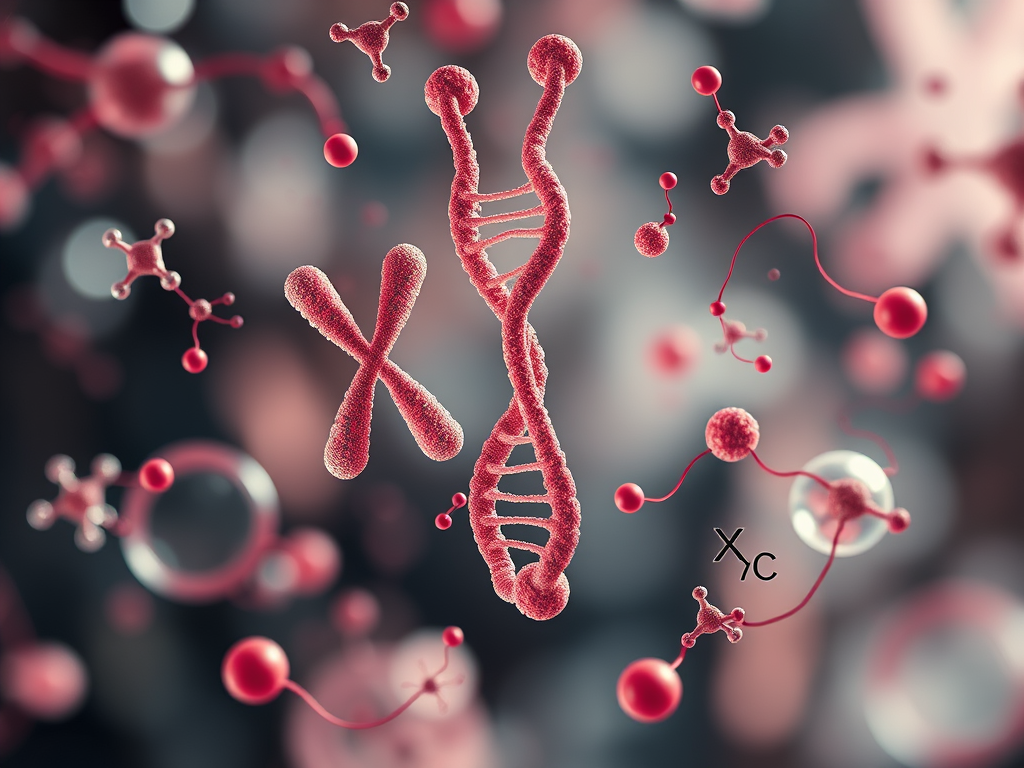
If you know a bit about biology you will probably say that biological sex is caused by chromosomes, XX and you’re female, XY and you’re male. This is “chromosomal sex” but is it “biological sex”?
Well…
Turns out there is only ONE GENE on the Y chromosome that really matters to sex. It’s called the SRY gene. During human embryonic development the SRY protein turns on male-associated genes. Having an SRY gene makes you “genetically male”. But is this “biological sex”?
Sometimes that SRY gene pops off the Y chromosome and over to an X chromosome. Surprise! So now you’ve got an X with an SRY and a Y without an SRY. What does this mean?
A Y with no SRY means physically you’re female, chromosomally you’re male (XY) and genetically you’re female (no SRY). An X with an SRY means you’re physically male, chromsomally female (XX) and genetically male (SRY). But biological sex is simple! There must be another answer…
Sex-related genes ultimately turn on hormones in specifics areas on the body, and reception of those hormones by cells throughout the body. Is this the root of “biological sex”??
“Hormonal male” means you produce ‘normal’ levels of male-associated hormones. Except some percentage of females will have higher levels of ‘male’ hormones than some percentage of males. Ditto ditto ‘female’ hormones. And…
…if you’re developing, your body may not produce enough hormones for your genetic sex. Leading you to be genetically male or female, chromosomally male or female, hormonally non-binary, and physically non-binary. Well, except cells have something to say about this…
Maybe cells are the answer to “biological sex”?? Right?? Cells have receptors that “hear” the signal from sex hormones. But sometimes those receptors don’t work. Like a mobile phone that’s on “do not disturb’. Call and call, they will not answer.
What does this all mean?
It means you may be genetically male or female, chromosomally male or female, hormonally male/female/non-binary, with cells that may or may not hear the male/female/non-binary call, and all this leading to a body that can be male/non-binary/female.
Try out some combinations for yourself. Notice how confusing it gets? Can you point to what the absolute cause of biological sex is? Is it fair to judge people by it?
Of course you could try appealing to the numbers. “Most people are either male or female” you say.
Except that as a biologist professor I will tell you…
The reason I don’t have my students look at their own chromosome in class is because people could learn that their chromosomal sex doesn’t match their physical sex, and learning that in the middle of a 10-point assignment is JUST NOT THE TIME.
Biological sex is complicated. Before you discriminate against someone on the basis of “biological sex” & identity, ask yourself: have you seen YOUR chromosomes? Do you know the genes of the people you love? The hormones of the people you work with? The state of their cells?
Since the answer will obviously be no, please be kind, respect people’s right to tell you who they are, and remember that you don’t have all the answers. Again: biology is complicated. Kindness and respect don’t have to be.
Note: Biological classifications exist. XX, XY, XXY XXYY and all manner of variation which is why sex isn’t classified as binary. You can’t have a binary classification system with more than two configurations even if two of those configurations are more common than others.
Our thinking is shaped by the language in which we think. Many ancient Middle Eastern cultures identified 3, 4, 5, and in one case even 6 genders. And their languages had support for these concepts. Did that make their entire civilization wrong? Hardly.




You must be logged in to post a comment.