Archives

The Evolution of “Biological Women” (Part Three: 2008 – 2026)

THIS IS NOT MY PERSONAL WORK!

I’ve made a copy here to be easy to reference. The work in question goes to American Samizdat, on Facebook. All credit and copyrights belong to that author. I’m making a copy here so I can always find it.

The Evolution of “Biological Women” (Part Three: 2008 – 2026)

There are three factors to comprehend about the state of affairs with respect to scientific, political, and public understandings of transgender Americans.

Trigger warning: many of you are NOT going to be happy with this article. I hope you read on, anyway.

ONE: There’s clear scientific/scholarly consensus that what defines a “woman” or “man” is not solely biological, that human sex/gender exists on a spectrum. Overwhelmingly, researchers see cultural conditioning about gender expectations as a critical part of the mix. Even biological influences are more complex than any insistence on genetics and genitalia as the sole determining factors.

This consensus, however has been effectively neutralized:

TWO: What it means to be “transsexual” (1949 – c.1990s) or “transgender” (post — 1990s) is disputed because those terms are both recent and seemingly malleable. In a sociopolitical milieu where certainty is rare, the simplicity of “biological women/men” has an edge over the nuanced complexity of “transgender” even in feminist, LGBTQIA+, and transgender communities.

THREE: The “biological woman/man” momentum has been sustained by masterful rhetorical strategy, changes in the social media milieu, and billions invested that no organization, political party, or wealthy contributors have yet matched.

Let’s be mercilessly clear: I agree 100% with the Lemkin Institute for Genocide Prevention and Human Security “that the United States is squarely within the early to middle stages of a genocidal process against trans people, the goal of which is to completely erase transgender people not only from public life but also from existence in the U.S. and globally.” [March 2026] (1)

I’m not writing from despair but stark realism, and the need to mobilize a better financed and organized strategic response. The stakes are too high to surrender.

Let’s document the scientific/scholarly consensus quickly:

From “Emerging Themes in Epidemiology,” an article by Hélène Colineaux, Lola Neufcourt, Cyrille Delpierre, Michelle Kelly‑Irving, and Benoit Lepage, “Explaining biological differences between men and women by gendered mechanisms,” (2023):

“Biological differences between men and women seem to not be purely explained by biological mechanisms.” (2)

From L. Camille Herbert, “Defining ‘Woman’: Biological Sex and Gender,” Ohio State University, Moritz College of Law (2023):

“Social conservatives do not have science on their side, because current understandings of biology do not support a strict male and female binary.” (3)

From “The Lancet” article by Katrina Karkazis, “The misuses of ‘biological sex,’” (2019):

“Research since (1950s) has expanded the range of variables that produce sex. As one example, the Y chromosome was once said to trigger testes development in fetuses. Later research showed a gene called SRY, located on the Y chromosome, “pushed” primordial germ cells in the embryo to become testes. We now know there are active genes involved in both ovary and testis determination across the genome, and not restricted to the X and Y chromosomes.

“As biologist Anne Fausto-Sterling has observed, ‘[T]hose looking to biology for an easy-to-administer definition of sex and gender can derive little comfort from the most important of these [research] findings.’”

Yet that doesn’t matter, because academic journals aren’t where public debate occurs.

Why? Consider the terms “lesbian,” “gay,” “transsexual,” and “transgender.”

The term “lesbian” (referring to sapphic women from the isle Lesbos) is two millennia old, and “gay” dates back at least 400 years in the English-speaking world.

“Transsexual” was invented in 1949 to replace the 19th Century term “sexual invert,” and “transgender” did not replace it until the 1990s in a peacemaking attempt inside what we today call the LGBTQIA+ community.

As Jillian Todd Weiss wrote (2004) for the “Journal of Bisexuality” in “GL vs. BT: The Archaeology of Biphobia and Transphobia Within the U.S. Gay and Lesbian Community”:

“The term was used as an umbrella term referring to transvestites, crossdressers, transsexuals, and other gender-variant people, who seemed to have similar and interlocking interests with gay men and lesbian women. …

“‘Transgender’ was intended by its coiner to refer only to certain non-operative transsexuals, but later mutated to refer to anyone whose gender performance varied from the norm.

“This more open meaning … conflicted with the goals of the coalition builders, which was to capture public sympathy by appealing to an image of homosexuals as people ‘just like’ the majority of U.S. voters, … who wanted the same lives that the majority of U.S. voters wanted. As a result, some gays find themselves agreeing with straights who see in transgenders an assault on normative reality. …” (5)

In 2011, Talia Mae Bettcher (trans woman social scientist) tackled this fissure with “Trans Women and the Meaning of ‘Woman,” in “The American Philosophical Association on Philosophy and Lesbian, Gay, Bisexual, and Transgender Issues”:

“There … is a familiar view of transsexuality that speaks of women trapped male bodies and men trapped inside female bodies. On this view — let’s call it the ‘Wrong Body Model’ — transsexuality is a misalignment between gender identity and sexed body. At its most extreme, the idea is that one’s real sex, given by internal identity, is innate.

“It is on the basis of this identity that one affirms that one … has a claim to the surgical procedures that bring one’s body into alignment with one’s identity. …

”Another view, explicitly political, … says that trans people challenge the traditional binary between man and woman. Because, on this view, trans people do not fit neatly into the two categories ‘man’ and ‘woman,’ mainstream society attempts to force trans people into this system in order to make it appear that there is a sharp dichotomy between men and women. …” (6)

Bettcher rejected both approaches, working toward a resolution preserving the best of both. Her thought-provoking article didn’t resolve this dichotomy, however, so I leave it to you to read it if you want details.

Her article IS critical for the understanding that by 2011 — as fourth-wave feminism was spawning TERFs (Trans-excluding Radical Feminists) — the LGBTQIA+ community had already fractured in its own understanding of the term.

That’s the point Weiss had made in 2004:

“Some transgenders pass as heterosexuals and reject homosexual identity by calling their sexual relations heterosexual. The reaction of the gay and lesbian community, predictably, has been an attempt to limit the inclusion of transgenders … a result of the previously identified tensions between accomodationism and gender ambiguity, and between homosexual identity and ‘passing.’” (5)

Fourth wave feminism emerged between the 1990s — 2010; its advocates leaving trans individuals out in the cold, as Hyun Jae-Lee documented in “A Critical Study of Identity Politics Based on the Category ‘Biological Woman’ in the Digital Era: How Young Korean Women Became Transgender Exclusive Radical Feminists” (2020) in “The Journal of Asian Sociology”:

“At the end of the 20th century, feminists of the third wave had clearly recognized that the substance of identities like human, woman, and subject is a kind of fantasy. They have suggested that no essence exists behind gender identity and that the gender that we know is the stylization of the body created through performative repetition. …

”[But] around 2011, when social networking services began to connect with large-scale mobile environments, the so-called fourth wave of feminism appeared … fueled by online environments. … The fourth wave emphasizes the identity of the female body in the sexual dichotomy and, worrisomely, there is a tendency toward the exclusion of transgender people. …” (7)

Hello, JK Rowling.

Sociologist Judith Butler (via “Mother Jones’” 2026 “How the Right Uses “Gender Ideology” to Blame Trans People for Everything”) noted that “gender ideology” — which the right converted around 2015 into “transgender ideology” — traced back to …

“… the 1990s, when conservative Catholics began warning that the very concept of ‘gender’ had subverted God’s will and “inspired ideologies” that were imperiling the nuclear family. In a 2004 letter to bishops, the Vatican decried homosexuality, railed against feminists for making women ‘adversaries’ of men, and reaffirmed binary masculinity and femininity as the purest expression of God’s love.

“Any subversion of traditional gender roles wasn’t merely sinful. It wrought a culture, the Vatican said, that corrupted society at large.” (😎

Evangelical Christians and Christian Nationalists started riding this trend around 2011.

Meanwhile, TERFS appropriated the originally neutral term “transgenderism” for equally hostile reasons, as Jill Serrano noted in her 2023 “Medium” article “History of the Word ‘Transgenderism’ and why ‘eradicating transgenderism’ = eradicating transgender people”:

“TERFs … purposefully misappropriated it in a way that confuses the state of being transgender with a potentially dangerous political ideology” invoking “oppressive ideologies (e.g., sexism, racism, fascism, and others) that also just so happen to end with the suffix ‘-ism.’” (9)

Thus it became easier in rhetorical discourse to sell that sharp sexual dividing line of genes and genitalia.

Around 2022, X, Meta, and TikTok changed moderation practices, permitting more of what had been “hate speech.” Monica Armas-Neira in her 2026 article “Weaponizing Transphobia on Social Media” for “The Journal of Psychiatry Residents” calculated that on major platforms …

“… homophobic, racist, and transphobic posts [were] surging by 50% in volume and 70% engagement.” (10)

Maria Bonafonte Recio, Rubén García-Sánchez, Kátia Bones Rocha, and Konstantinos Argyriou examined responses generated by people without strong opinions on trans issues in “From Identification to Justification: How People Interpret Everyday Episodes of Sexism, Homophobia, and Transphobia” (Springer, 2026), finding that …

“… recognition of discrimination was shaped not only by judgments of disrespect but also by whether the victim’s social identity was deemed relevant. …

“Some participants framed the episodes as manifestations of structural inequality and objectification, whereas others denied or minimized them by invoking the absence of hostile intent, individualizing the behavior, or appealing to essentialist views [“biological woman/man”] of gender and sexuality.” (11)

As Schuyler Mitchell put it at “Mother Jones”:

“The right’s gripe isn’t just that trans people exist, but that their existence is tearing down the old world—of good men, obedient women, traditional family structures—and unleashing a new, godless age of chaos and precarity on you. …

“This is why Trump’s executive order promises specifically to ‘protect’ women. And why the right echoes the rhetoric of … TERFs, who have been some of the loudest voices calling for the eradication of ‘gender ideology.’” (😎

Funded by billionaire donors, Mr Trump understands that simplistic anti-trans messages win votes, as noted in Agence France Presse (AFP) in “Republicans find transgender issues a powerful political weapon in midterm campaigning”:

“Only a tiny fraction of Americans are transgender. But controversy over the minority’s rights, especially the presence of a handful of transgender athletes in women’s sports, has proved political dynamite in Trump’s hands before — and, he says, will again.

“Denouncing transgender athletes is ‘one of our great soundbites of all time,’ he recently told a rally. ‘I like to wait about a week before the election’ before raising it, he said, claiming that he was ‘petrified’ that Democrats would suddenly drop their support for transgender people.” (12)

Many Democrats agree with him, as Steve Peebles and Geoff Mulvhill opined for AP in “Some Democrats are recalibrating their approach to transgender issues as they seek a path to power”:

“Soul searching over transgender issues is one facet of a sprawling identity crisis that Democrats are confronting. … There is … a sense in some corners that the party must evolve on an issue where the overwhelming majority of voters — even many Democrats — agree with Trump.” (13)

Why do “the overwhelming majority of voters” agree with Trump on transgender issues?

Because the simplistic “Biological women/man” approach and its less savory accompaniments about mental illness, “homos,” delusions, presence, and threat … worked.

It worked because confusing terminology and definitions, combined with uneven support among LGBTQIA+, feminist, and Christian communities (as well as the Democratic Party) was driven by social media changes and heavy GOP donor investment …

… against which the trans community’s disjointed, underfunded response has been (bluntly) almost totally ineffective …

… putting all trans individuals at risk ..

When they say “eradicating transgenderism” they don’t so much mean the idea of transgender as they mean … erasing and eradicating transgender Americans.

I know you don’t want to believe that.

Neither did the Jews, transgender Germans, the Romany, or the mentally challenged in the 1930s.

A win in the 2026 midterms is only a delay. This edifice has been built so carefully, and the rationalizations for “good people” to be passive bystanders have advanced so far that without a better funded, more coordinated strategy … the trans community is in deeper trouble than most individuals within it understand.

I’ll talk strategy next time … if you are still listening to me.

========

SOURCES

(1) “Red Flag Alert – Anti-Trans Genocide in the USA – #3,” https://www.lemkininstitute.com/…/red-flag-alert—anti…

(2) “Explaining biological differences between men and women by gendered mechanisms,” https://link.springer.com/…/10.1186/s12982-023-00121-6.pdf

(3) “Defining ‘Woman’: Biological Sex and Gender,” https://papers.ssrn.com/sol3/papers.cfm?abstract_id=4555608

(4) “The misuses of ‘biological sex,’” https://www.thelancet.com/…/PIIS0140-6736…/fulltext…

(5) “GL vs. BT: The Archaeology of Biphobia and Transphobia Within the U.S. Gay and Lesbian Community,” https://www.tandfonline.com/doi/abs/10.1300/J159v03n03_02 (If you go through Google Scholar by searching article name you can bypass the gated version for a pdf copy.)

(6) “Trans Women and the Meaning of ‘Woman,” https://philarchive.org/archive/BETQWA

(7) “A Critical Study of Identity Politics Based on the Category ‘Biological Woman’ in the Digital Era …,” https://www.jstor.org/stable/26979894?seq=3 (You will need to register for a free JSTOR account to get past the gate for this.)

(😎 “How the Right Uses “Gender Ideology” to Blame Trans People for Everything,” https://www.motherjones.com/…/gender-ideology-mother…/ (DO NOT seek out Butler’s groundbreaking 2024 book “Who’s Afraid of Gender?” at Aunt Anna’s. It’ll set you back $10-12 at Amazon.

(9) “History of the Word ‘Transgenderism’ …” https://juliaserano.medium.com/the-history-of-the-word… (Be sure to follow the links back to her earlier work.)

(10) “Weaponizing Transphobia on Social Media,” https://psychiatryonline.org/…/appi.ajp-rj.2026.210307

(11) “From Identification to Justification: How People Interpret Everyday Episodes of Sexism, Homophobia, and Transphobia,” https://link.springer.com/…/10.1007/s12119-026-10608-4.pdf

(12) “Republicans find transgender issues a powerful political weapon …,” https://www.afp.com/…/republicans-find-transgender…

(13) “Some Democrats are recalibrating their approach to transgender issues …” https://www.nbc4i.com/…/ap-some-democrats-are…/
The Invention of “Biological Women” (Part Two: 1950 – 2007)

THIS IS NOT MY PERSONAL WORK!

I’ve made a copy here to be easy to reference. The work in question goes to American Samizdat, on Facebook. All credit and copyrights belong to that author. I’m making a copy here so I can always find it.


The Invention of “Biological Women” (Part Two: 1950 – 2007)

===========

Author’s note: I didn’t intend to write three parts, but this is too complex for two segments, and even then this installment is almost hopelessly cartooned against the realities of the period. I apologize — but you can’t write a book on social media.

I welcome corrections/additions, but please be careful about “correcting” my terminology. I agonized over this, but in the end had to go with the terms used during the period as defined then, and I ask humbly that you read them the same way.

===========

We live today — for many reasons, including the prevalence of digital media — in an “eternal present.” What is politically, economically, or culturally expedient to be considered “true” today is validated against not history, but a perceived (often invented) “traditional past” constructed not from evidence so much as fervor.

An example: the intense social media harassment of trans individuals (especially trans women) that stems from the “biological woman” construct all too often seems to have been with us forever.

The “biological woman” construct is the assertion that sex is innately biological, dependent primarily if not exclusively on genetics and genitalia, and that being “transgender” is a “woke” concept stemming from mental illness, delusion, and/or a desire for “biological men” to pretend to be women in order to threaten the safety and existence of “biological women.”

It results in massive, persistent online attacks, often involving “brigading” to launch multiply sourced attacks against individuals.

But neither mass social media harassment of trans people nor the right’s allegiance to the concept of “biological women” is longstanding. The phenomenon appears to be at most eight years old, and more probably six.

Online trans harassment has been extensive from 2024 – 2026. From 2020 – 2023 there’s also such content, but at about 60% less frequency and a far lower intensity.

Before 2020 published content trails off dramatically back to 2016, and that was generally far milder. (1)

Polling outfits and political scientists agree that “trans acceptance” peaked around 2014, and has been declining under coordinated attack ever since. (2)

For those the catch-phrase “biological women” was created, placing a false “spin” on a complex discussion that had been going on since the 1950s.

Trans people have a history in America, and without overlooking the trans protesters at Stonewall, their turning point came more quietly, at Johns Hopkins Medical School in Baltimore.

There would have been no JHMS without assertive women, as Mary Roth Walsh observes:

“The financially beleaguered Baltimore [medical] school had long been in the planning stage, but it had been unable to open because of lack of funds. Convinced that Johns Hopkins offered the best hope, a number of women collected $500,000 by 1892. They demanded that Johns Hopkins admit women on the same terms as men … The administration had no choice but to accept the women’s terms and, in 1893, three out of the twenty-one entering students in the first class were women.” (3)

So it’s fitting that when four researchers — “pediatric endocrinologist Lawson Wilkins, psychologist John Money, and psychiatrist couple Joan and John Hampson” — attacked the issue of the distinction between biology and gender, it happened at Johns Hopkins while they worked with intersex individuals. (4)

What follows is chiefly from Sandra Eder’s “How the Clinic Made Gender,” an amazing book that you absolutely need to read, as what follows is a pale, flawed abstraction, and cannot do it justice. (5) When you see a different footnote number, that information come from a different source; otherwise pretty much the next paragraphs depend on Eder.

The story began in 1948-1954 at the Johns Hopkins’s Harriet Lane Home for Invalid Children when Wilkins and Money began treating girls with congenital adrenal hyperplasia (CAH) which led them to the following quandary:

“How should girls with CAH live? They were chromosomally female and had internal reproductive organs such as ovaries and uteruses, but they had been born with male-appearing genitals and looked increasingly male as they grew up.”

That question overturned centuries of how the medical field considered the very nature of women.

The traditional viewpoint was that all presumed “female” traits were inherently biological, and relied on male scientists to construct both the questions and the answers, as noted far back as 1982:

“For a long time, biologists, anthropologists, psychologists, and physicians have allocated a great deal of attention to the question, ‘Why are males masculine and females feminine?’ They have searched busily for the answer: just the right ratio of nature to nurture required to produce our present schizophrenic state of affairs.

“Nature, it appears, works in ways mysterious and widely varying, depending upon which man of science we accept. Darwin thought that nature enabled us to distinguish boys from girls by endowing the latter with inferior traits at birth — a difference established through sexual

selection. John Money contends that nature controls behavior through our hormones and the differing spatial orientation of our genitals (also a favorite with psychologist Erik Erikson).

“Others have located nature’s imprint in a differential development of the left and right sides of our brains. And the sociobiologists locate it in our genes, which supposedly endow women with an updated version of the ‘mothering instinct’ — the evolutionary adaptation that equips women to guard parental investment in our offspring …”

In other words, scientists “do not accept all possible answers: only those congruent with the implicit assumptions that form the basis of their understanding of the world (an understanding shared with most of their “educated” contemporaries).”(6) [Another book you MUST read.]

Money and his colleagues in 1955 encountered “Charles,” a two-year-old with an exceptionally large penis who was already growing pubic hair. It turned out, however, that Charles had XX chromosomes and — upon surgical examination — ovaries and a uterus. HE was in fact, genetically and in most genital aspects, a SHE.

But Charles had been raised as a boy for the first two years of his life, and Money (who had introduced the term “gender role” the previous year) and his colleagues believed that “that gender role was determined by the sex in which the child had been raised rather than by sex chromosomes or other biological sex characteristics.”

So they provided what today we’d call “gender-affirming” surgery, and removed Charles’ ovaries and uterus, then placed the child on hormone therapy.

Think what this means about the origination of the terms “biological woman/man” and “gender roles.” Money and company developed the thesis that biology was in fact secondary to society’s imposition of gender roles and expectations in determining the sexual identity of a person.

In other words, “biological woman/man” was originated as a concept that biology is NOT determinative over all other factors in locating sexual identity.

Money went on in the 1960s to foster the establishment of the Johns Hopkins Gender Identity Clinic, whose 1966 statement of purpose included: ““If the mind cannot be changed to fit the body, then perhaps we should consider changing the body to fit the mind.”

By then the English term “transexual” was 17 years old, having been established in 1949, but the history of “transphobia” — both the concept and the term — is much more complicated … and represents a sad chapter in LGBTQIA+ history.

The chief proponents of transphobia from the 1950s up to the early 1980s were … lesbians.

As Jillian Todd Weiss argues, “There was a vigorous debate in the U.S. homophile movement of the 1950s as to whether homosexuals should embrace [transsexual Christine] Jorgensen. Some gay men and lesbians denounced those who felt themselves to be of the opposite sex, criticizing them for acting like ‘freaks,’ bringing disrepute to those gays and lesbians trying to live quietly within heterosexual society.”

Weiss also notes that during this period “some gays and lesbians associated gender transgression with undignified and low-class behavior, while ‘fairies’ and ‘butches’ were more readily accepted in working class communities,” and “a survey from the 1960s … found that more than two-thirds of a sample of almost 300 gays and lesbians in the homophile movement considered those who asked for sex-change surgery to be ‘severely neurotic.’”

More importantly, Weiss explains the impact of lesbian scholar Janice Raymond’s 1979 book “The Transsexual Empire: The Making of the She-Male,” which argued “that the phenomenon of transsexuality was created by fetishistic males who sought to escape into a faux stereotypical femininity, with the connivance of male doctors who thought that femaleness could be medically created and homosexuality medically vitiated.” (7)

The book may have contributed to the closing of the Johns Hopkins Gender Identity Clinic in the same year, though even Raymond herself suggests that Dr Money’s reputed extension of his theories into incest and child pornography was a more likely cause.

The work remains critical today because — while gleefully republished in 1994 as a kind of proto-TERF bible — its mischaracterizations of data and often bizarre sociological analysis have become fundamental (if unattributed) elements of today’s anti-trans hate campaigns. (😎

Raymond’s book was only one of multiple influential works within the LGBTQIA+ community between the 1970s – 1990s that trashed trans people. For a more complete list, go back to the Weiss article.

Weiss points out that the shift in the 1990s from the term “transsexual” to “transgender” within the LGBTQIA+ community was actually an attempt to sort of get around the animus toward medically transitioned individuals, because “transgender” …

“… was used as an umbrella term referring to transvestites, crossdressers, transsexuals, and other gender-variant people, who seemed to have similar and interlocking interests with gay men and lesbian women, and that had caught the imagination of the public through sympathetic portrayals of transsexuals such as Christine Jorgensen, Renee Richards and Wendy Williams. Originally, the term ‘transgender’ was intended by its coiner to refer only to certain non-operative transsexuals, but later mutated to refer to anyone whose gender performance varied from the norm.” (7)

In other words, the “trans” in “transgender” was originally more oriented toward “gender transgression” than “gender transition.”

“TERF” (Trans Exclusionary Radical Feminists) was not coined until 2008, but its origin clearly derives from Raymond’s work (especially its 1994 edition), and plays an interesting part in a quite strange transformation.

Here’s my current provisional conclusion about “biological women” and all the associated elements of sexual identity by 2008:

FIRST: The term “biological female/male” or “biological sex” was created in the 1950s as part of an argument that gender roles are more important to individual sexual identity than biology. This was applauded by a feminist scholarly pushback against a male-dominated scientific community looking for reasons to attribute all “negative” or “inferior” female characteristics to biology, thereby making them immutable and unchangeable.

SECOND: The 1960s became the first era of open medical transition, but that was cut short around 1979 due in no small part to segments of what we today consider the LGBTQIA+ community rejecting “transsexuals” as freaks or the mentally ill. (A tough pill to swallow.)

THIRD: The rapprochement between transsexuals (newly re-characterized as “transgender”) and the larger LGBTQIA+ community occurred in the1990s, with anti-trans LGBTQIA+ elements and the newly forming TERFs keeping up the fight against transgender legitimacy.

FOURTH: (this will be the meat of Part Three) — Since about 2008 — and definitely since 2014 — the arguments of anti-trans elements of LGBTQIA from 1979 – 19905 and by TERFs soon thereafter were picked up by the far right (without attribution) and morphed into a political crusade against “Transgender ideology.”

How that happened is critically important to understand if we expect to defeat it.

=========

SOURCES

(1) A sample of earlier works on this topic includes Shagun Jhaver, Sucheta Ghoshal, Amy Bruckman, and Eric Gilbert. 2018. “Online Harassment and Content Moderation: The Case of Blocklists,” (ACM Transactions on Computer-Human Interaction) 2018) https://dl.acm.org/doi/pdf/10.1145/3185593 and Alan Marwick and Rebecca Lewis, “Media Manipulation and Disinformation Online” (Data & Society) (2017) https://www.posiel.com/…/Media-Manipulation-and…

(2) Penelope Higgins, “Fascism and the Trans Villain: Historically Recurring Transphobia in Far-Right Politics,” (Graduate History Review) (2023) https://journals.uvic.ca/…/ghr/article/view/ghr12202321578 (note: if you search this through Google Scholar you will find that you can download an un-gated pdf pre-print of the article.

(3) Mary Roth Walsh, “The Quirls of a Woman’s Brain,” in Ruth Hubbard, Mary Sue Henifen, and Barbara Fried, eds., “Biological Woman — The Convenient Myth” (Schenkman) (1982). If you look hard enough you can find a copy online. It used to be at the Internet Archive but has been removed. I would never tell you to visit your Aunt Anna.

(4) Alexander Rony and Hagit Caspi, “Author Interview with Sandra Eder: How the Clinic Made Gender,” (UC Berkeley Letters & Science) (2023) https://ls.berkeley.edu/…/author-interview-sandra-eder…

(5) Sandra Eder, “How the Clinic Made Gender: The Medical History of a Transformative Idea” (University of Chicago) (2022) If you cannot find it at the source I didn’t mention above, Amazon will sell you a used copy for about $10. https://www.amazon.com/How…/dp/0226819930/ref=sr_1_1…

(6) Ruth Hubbard, Mary Sue Henifen, and Barbara Fried in “Introduction” to “Biological Woman — The Convenient Myth” (see note 3 above).

(7) Jillian Todd Weiss, “GL vs. BT: The Archaeology of Biphobia and Transphobia Within the U.S. Gay and Lesbian Community,” (Journal of Bisexuality) (2004) https://www.tandfonline.com/doi/abs/10.1300/J159v03n03_02 (If you go through Google Scholar by searching article name you can bypass the gated version for a pdf copy.)

(8 ) Janice G. Raymond, “The Transsexual Empire: The Making of the She-Male” (Athene Series) (1994 reprint of 1979 edition with a new introduction by the author). Hard copies of this book today go for hundreds of dollars; most certainly DO NOT visit Aunt Anna.

If Defending The Human Rights Of Any Group Is A Purity Test, Then You’ve Outed Yourself As Being Pro-Genocide

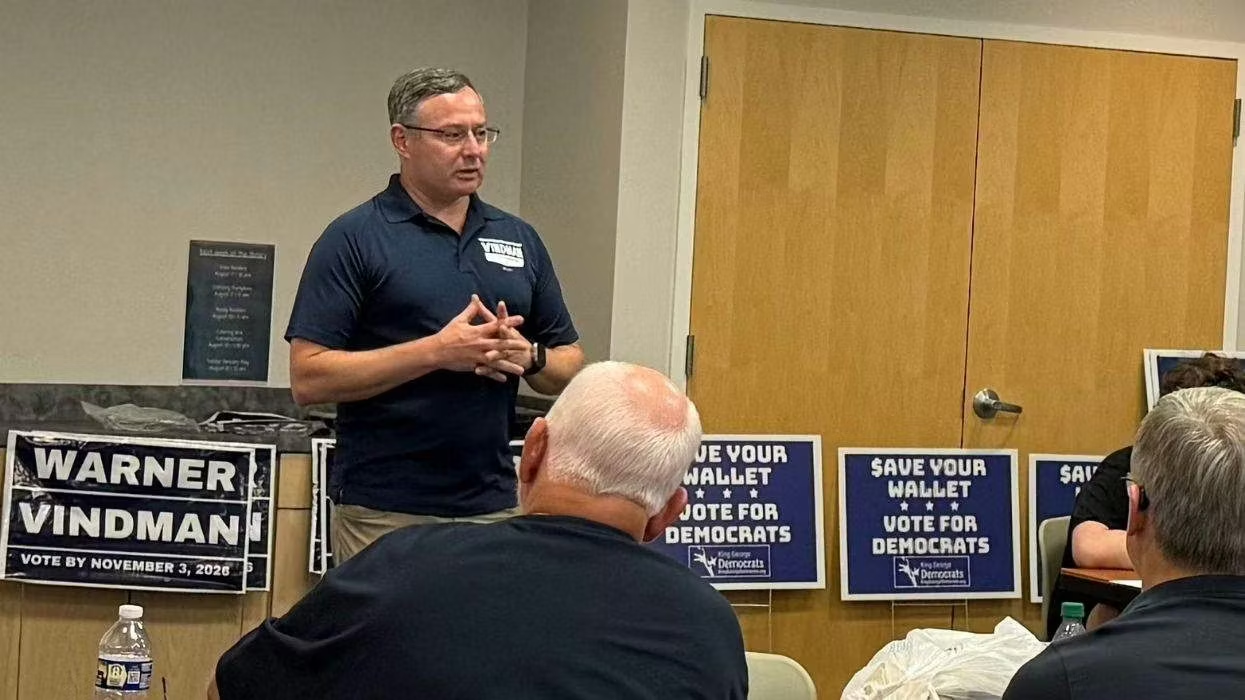
I recently responded to a white cishet man who presented himself as a Democrat that trans people must forgive Representative Robert Vindman for voting against the safety of trans kids. Below is my response to him. I’ve linked the article that generated this response after said man said this was a “purity test” that would hurt Democrats generally.


Virginia congressman’s meeting with transgender Democrats erupts into profanity. Then he walked out.

Nobody gets to declare themselves an ally then betray that community. He betrayed that community, period, full stop.

Hopefully, he learned something in this exchange. Just because he is a loving parent doesn’t mean every parent is. He had actual trans people explaining this to him and he refused to listen.

I guarantee the entire LGBTQ community would have been up in arms if the bill had included outing gay kids because they’ve lived through this too.

LGBTQ kids are 5%-10% of the total under 18 population, based on different attempts to measure that number. Yet LGBTQ kids are over 40% of homeless children. Of the remaining 60% of homeless kids, the overwhelming majority left home voluntarily. Of that 40% who are LGBTQ, 99% left home because they were thrown out.

Vindman is refusing to listen to the lived experiences of trans people who came to talk to him. This is no different than a white man refusing to listen to the lived experiences of Black people and trying to justify a racist vote. It’s the exact same thing.

I want to ask you a question. Do you know what the Lemkin Institute is?

It is a private non-profit organization set up after WWII to try to identify and stop genocides before they become full blown mass killings. They have identified every single genocide in progress since WWII before it became mass murder. They also have never successfully stopped a genocide before it became mass murder because Western governments refused to act.

The Lemkin Institute has issued three separate warnings that the Trump administration is on track to commit genocide of transgender people. Such a warning has never been issued against the United States before. Yet now we have 3 warnings from the Lemkin Institute.

If they are as successful as they’ve been in the past, assholes like you will be erecting monuments to dead trans people saying “Who could have seen it coming?” and “I wonder what we could have done to stop it?” once this is all over.

Yet some huge number of trans people are going to end up dead if this continues down this road. And now we have Democrats piling on to the genocidal actions of the Trump administration.

Genocides start by identifying the target, dehumanizing the target, making them an enemy that the majority no longer cares about, separating them from the “good” majority (often for their own “safety”), and then eventually, mass killing them as a final solution.

The Trump administration is actively engaged in those first three actions listen above and Republicans across the nation are calling for trans people to be segregated from public life. Some are already calling for them to be “rounded up”. What do you think comes after “rounding up” trans people?

The only expectation I have from any Democrat is that they are not bendable on human rights. Because any Democrat willing to throw one group under the bus has proved himself willing to throw other groups under the bus.

Vindman is a privileged white man who refused to listen to trans voters or Black voters who tried to talk to him then tried to justify his actions against human rights as “being a parent”.

Fuck Vindman. If that’s the sort of Democrat he is, trans voters don’t need him as a representative, because, to us, he’s no different from a Republican.

And don’t bring up other rights and freedoms of other groups because if we’re being put in camps, what good are those “freedoms” to us?

The Truth About Sapphic Divorce Rates

This information was originally posted as a thread by bambi_girl_wlw (Sumaya Si) on Threads. I have consolidated this thread here for easy reference for anyone that wants to use the data. Everything between the separators here is her work.


Lesbian divorce rates are not unusually high. Reality is lesbians have the lowest rates of cheating and some of the highest relationship satisfaction. This thread debunks a widely misunderstood statistic—using real data.

The “70%” figure comes from ONS data from England and Wales, but it is often misunderstood. The data do not say that 70% of lesbian marriages end in divorce. What the ONS data actually state is that among all same-sex divorces, about 70% involved lesbian couples and 30% involved gay male couples. Importantly, the absolute number of divorces is low for both groups.

If we look further into the ONS data, the percentage of same-sex divorces involving lesbian couples was:

  • 2017: 74% female couples, 26% male couples
  • 2019: 72% female couples, 28% male couples
  • 2021: 67.2% female couples, 32.8% male couples

From this, we can conclude that the gap has been narrowing each year.

You might still think this is high compared to gay male couples. However, lesbians are more likely to get married than gay men. In England & Wales, according to the Office for National Statistics (ONS), the female share of same-sex marriages was:

  • 2014: 56.1%
  • 2016: 55.7%
  • 2018: 57.2%
  • 2020: 57.2%
  • 2022: 62.8%

This shows that the marriage rate among lesbian couples is increasing. If we look closely at 2021–2022, the share of marriages and divorces was almost the same. 

According to the 2021 Census and recent surveys (which measure individuals, not couples):
About 2.8% of men identify as gay
About 1.2% of women identify as lesbian
This means there are fewer lesbians overall, yet they make up a larger share of same-sex marriages, suggesting that a higher percentage of lesbians are getting married. 

Yes, in most countries, lesbians do have higher divorce rates than gay men. However, there are exceptions. For example, in Taiwan, gay men actually have a slightly higher divorce rate. From Taiwan MOI / GEC data, when used consistently:
65–70% of same-sex marriages are female couples
~30–35% are male couples
~60–63% of same-sex divorces are female couples
~37–40% are male couples
When these numbers are normalized, gay male couples show a slightly higher divorce rate per marriage. 

Reasons why lesbians may initiate more divorces compared to gay men 

  1. Lesbians are more likely to get married A summary of LGB adults from the Williams Institute showed that: About 51% of women who identify as lesbian were married or cohabiting Only about 35% of gay men reported being in a partnered relationship In most countries, there are more gay men overall, yet lesbians make up a larger share of marriages. I reviewed multiple datasets across different countries, and most showed the same pattern. This suggests that many lesbian women getting married earlier.
  2. Multiple studies suggest that gay men are more likely to be in open relationships than lesbians: In an analysis by Blumstein & Schwartz (cited in Peplau & Beals), 82% of gay male couples reported being non-monogamous, compared to 28% of lesbian couples According to Wikipedia’s summary of available data, about 33% of gay men reported being in open relationships, versus only about 5% of lesbians This suggests that gay men may be less likely to divorce due to adultery or cheating.
  3. Parenting and child-related stress According to U.S. Census data (2019): 22.5% of female same-sex couple households had at least one child under 18 6.6% of male same-sex couple households had at least one child under 18 Overall, lesbians are more likely to have children than gay men, which may mean that parenting-related conflicts are less common in gay male couples. Additionally, lesbian women are more likely to experience pregnancy- and postpartum-related stress, which affect marriages.
  4. Lesbians are the group least likely to cheat on their partner. According to the study “Extradyadic Sex and its Predictors in Homo- and Heterosexuals” by J. Haversath & Kröger (2014):
    4% of lesbian women
    34% of gay men
    29% of heterosexual women
    49% of heterosexual men reported extradyadic sexual contacts (aka cheating).
    This explains that lesbians are individuals who leave the relationship instead of committing adultery.
  5. Lesbians are the happiest and most satisfied among all couples. This suggests that lesbians tend to leave bad relationships earlier. Studies show that lesbian’s tend to be the happiest and most satisfied among all types of couples. For example, a longitudinal study tracking lesbian, gay male, and heterosexual couples over time found that lesbian couples consistently reported the highest overall relationship quality on average across all assessments
    https://pubmed.ncbi.nlm.nih.gov/18855506/

In another Swedish follow-up study of couples after assisted reproduction, researchers found that lesbian couples reported greater relationship satisfaction and maintained stable, happy feelings—even when facing the stress of treatment.
https://link.springer.com/article/10.1186/s12905-014-0154-1

When comparing lesbians specifically to heterosexual women, research also reveals significantly higher levels of satisfaction for lesbian couples.


Again, this information was compiled by bambi_girl_wlw (Sumaya Si) on Threads, and all credit should be extended to her.