Tag Archive | hormones

The Transgender Sports Issue

Recently, Pete Buttigieg tried to assert that the transgender sports issue is “complex” and that the voices of those who oppose trans girls in sports should be heard too. I suppose you could claim the issue is “complex” but there’s already a great deal of scientific research about this that’s complete. Some of the studies included large numbers of trans athletes too, so the results are something to think about. Let’s look at a few of the largest of those studies.

The US Air Force conducted two studies about transgender athletic performance, using transgender and cisgender service members. Service members are in considerably better physical condition than the rest of the United States because they have to be. They take and must pass physical fitness tests multiple times per year. Failure to pass usually means the soldier in question has a limited time to retake and pass the test or be discharged from the service for failure to meet the physical requirements associated with military service.

So service members provide an excellent proxy for athletes and there is a large number of them that can be evaluated to get reasonable samples. So what did the Air Force find about transgender service members?

First, before beginning hormone replacement therapy (HRT), transgender women consistently performed worse than cisgender men. After one year of hormone therapy, transgender women performed worse than with no hormone therapy but still better than cisgender women. But by two years of HRT, transgender women performed in the same range as cisgender women in every category measured, except one. Even their bone density lessened until it was the same as cisgender women’s bone density. Their VO2 max lessened until it was in the same range as cisgender women.

Now, to be specific, in the smaller Air Force study conducted by TA Roberts, J Smalley, and D Ahrendt, after 2 years, trans women showed a minor run speed advantage but performed otherwise the same as cisgender women in all other tests. In the larger study, done by E. Chicarelli, J Aden, D Ahrendt, and J Smalley, the run speed advantage vanished when examined across a larger sample size. I’ve provided a link to the study below which is from the National Library of Medicine. Further, the larger study went on to the four years mark of HRT as well, however, many of the transgender service members chose to leave the service and were not available for comparison in the four year data sample.

This wasn’t a unique result either. The International Olympic Committee has studied this multiple times and found no basis to support any claim that transgender women will outperform cisgender women. In fact, in April 2024, the IOC released another study that said that, based on the data measured, transgender women not only did not perform better than cisgender women in elite athletics but the data suggested that trans women are actually at a minor handicap in elite athletics vs cisgender women. Trans women athletes tend to have more body fat and less lean muscle mass than cisgender women athletes. The IOC did find that trans women retained an advantage in grip strength though.

So what the science is telling us, repeatedly, is that in most sports, trans women do not have a significant advantage over cisgender women. This is especially true of team sports like basketball, volleyball, and soccer. You can argue that more specific research needs to be done but anyone making the blanket claim that trans women should be banned from all women’s sports is simply talking from a position of ignorance and bigotry.

Finally, what has not been done is any sort of analysis on trans girls who never undergo male puberty. That’s a study that likely needs to be done. However, as someone who coached youth soccer for years, I can state that I very often found pre-pubescent cisgender girls to be more athletic than the pre-pubescent cisgender boys. That’s anecdotal but it’s a common observation. What we don’t currently have (to the best of my knowledge) are any significant studies on the impacts of puberty blockers and HRT on trans kids who do not then experience their biological puberty.

We can give Pete the benefit of the doubt on this because it is a nuanced issue and it does need more study. However, I think we can authoritatively agree that total bans on trans women and trans girls in all women’s sports is not based on science, and has more to do with bigotry and hate than with anything scientific.

REFERENCES:

The Impact of Gender-Affirming Hormone Therapy on Physical Performance

Strength, power and aerobic capacity of transgender athletes: a cross-sectional study
Biology Is A Shit Show

This has been posted elsewhere many times over the years and was composed by Rebecca Helm, a biologist and assistant professor at the University of North Carolina (at least at the time this was written).

Rebecca Helm, a biologist and an assistant professor at the University of North Carolina, Asheville US writes:

Friendly neighborhood biologist here. I see a lot of people are talking about biological sexes and gender right now. Lots of folks make biological sex sex seem really simple. Well, since it’s so simple, let’s find the biological roots, shall we? Let’s talk about sex…[a thread]

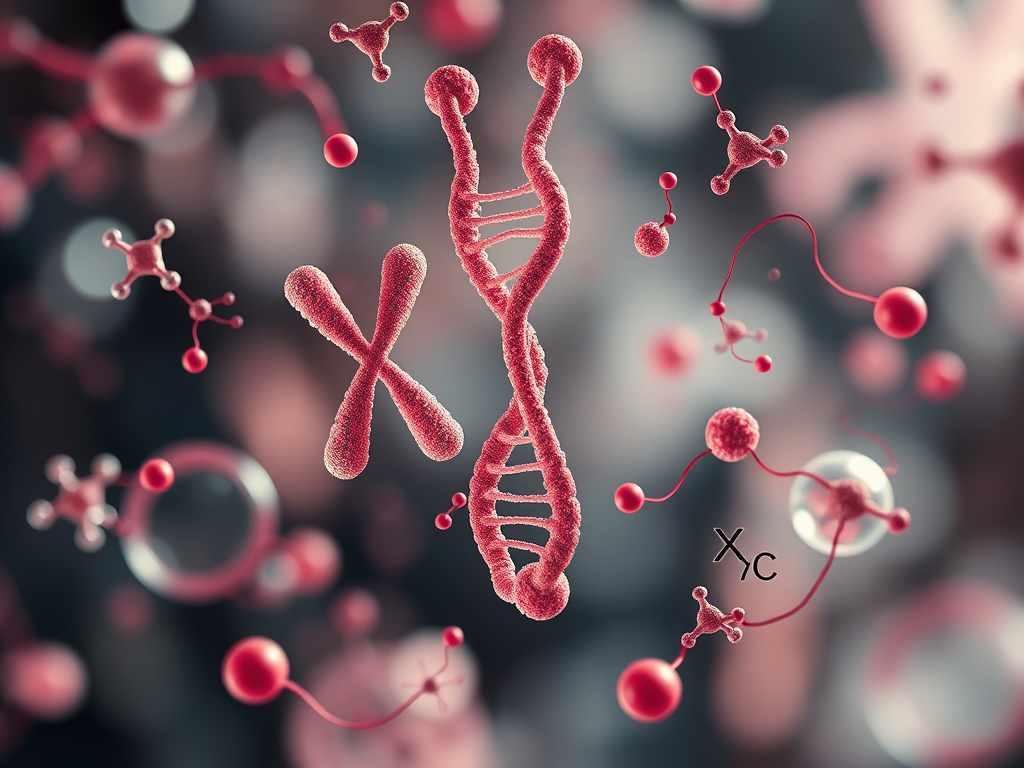
If you know a bit about biology you will probably say that biological sex is caused by chromosomes, XX and you’re female, XY and you’re male. This is “chromosomal sex” but is it “biological sex”?

Well…

Turns out there is only ONE GENE on the Y chromosome that really matters to sex. It’s called the SRY gene. During human embryonic development the SRY protein turns on male-associated genes. Having an SRY gene makes you “genetically male”. But is this “biological sex”?

Sometimes that SRY gene pops off the Y chromosome and over to an X chromosome. Surprise! So now you’ve got an X with an SRY and a Y without an SRY. What does this mean?

A Y with no SRY means physically you’re female, chromosomally you’re male (XY) and genetically you’re female (no SRY). An X with an SRY means you’re physically male, chromsomally female (XX) and genetically male (SRY). But biological sex is simple! There must be another answer…

Sex-related genes ultimately turn on hormones in specifics areas on the body, and reception of those hormones by cells throughout the body. Is this the root of “biological sex”??

“Hormonal male” means you produce ‘normal’ levels of male-associated hormones. Except some percentage of females will have higher levels of ‘male’ hormones than some percentage of males. Ditto ditto ‘female’ hormones. And…

…if you’re developing, your body may not produce enough hormones for your genetic sex. Leading you to be genetically male or female, chromosomally male or female, hormonally non-binary, and physically non-binary. Well, except cells have something to say about this…

Maybe cells are the answer to “biological sex”?? Right?? Cells have receptors that “hear” the signal from sex hormones. But sometimes those receptors don’t work. Like a mobile phone that’s on “do not disturb’. Call and call, they will not answer.

What does this all mean?

It means you may be genetically male or female, chromosomally male or female, hormonally male/female/non-binary, with cells that may or may not hear the male/female/non-binary call, and all this leading to a body that can be male/non-binary/female.

Try out some combinations for yourself. Notice how confusing it gets? Can you point to what the absolute cause of biological sex is? Is it fair to judge people by it?

Of course you could try appealing to the numbers. “Most people are either male or female” you say.

Except that as a biologist professor I will tell you…

The reason I don’t have my students look at their own chromosome in class is because people could learn that their chromosomal sex doesn’t match their physical sex, and learning that in the middle of a 10-point assignment is JUST NOT THE TIME.

Biological sex is complicated. Before you discriminate against someone on the basis of “biological sex” & identity, ask yourself: have you seen YOUR chromosomes? Do you know the genes of the people you love? The hormones of the people you work with? The state of their cells?


Since the answer will obviously be no, please be kind, respect people’s right to tell you who they are, and remember that you don’t have all the answers. Again: biology is complicated. Kindness and respect don’t have to be.


Note: Biological classifications exist. XX, XY, XXY XXYY and all manner of variation which is why sex isn’t classified as binary. You can’t have a binary classification system with more than two configurations even if two of those configurations are more common than others.

Biology is a shitshow. Be kind to people.

Let’s Talk Biology Again

I’ve discussed this before, in bits and pieces, here and there, now and again. But perhaps it’s wise to assemble all this under one roof where it can be easily referenced.

Approximately 1 in 15000 females, at birth is XY. They are females with female genitals, the works. XY does not mean male. Of these, 1 in 80,000 is Swyer’s Syndrome, and 1 in 20,000 has complete androgen insensitivity syndrome. Another subset has partial androgen insensitivity syndrome and estimates of those born female vary greatly there, from 1 in 20,000 to 1 in 50,000. The cumulative numbers for these three groups are generally assessed at 1 in 15,000, but the frequency could be even higher. The vast majority of XY females are sterile, but rarely some are not, as documented in this study.

1 in 20000 males at birth is XX, also called de la Chapelle syndrome. They are males with male genitals. XX does not mean female. However, the frequency of XX males where the SRY gene crossed over from the Y chromosome to the X may be even higher than that, as this study suggests SRY gene crossover happens more often than previously suspected.

1 in 600 children is XXY, Klinefelters. For the longest time, doctors assumed XXY were always male, because only XXY males had fertility issues, until some biologists decided to go look. And suddenly they found lots of XXY females. This breakthrough came in the last decade so it is relatively “new” news and not all doctors may have heard this year.

The above situations are all scientific facts and prove, conclusively that sex and gender are not determined solely by 5th grade biology lessons about XX and XY, which were simplified for you because at that point in your life, you couldn’t have handled the complexities involved.

So what determines sex and gender? What sex is a male soldier who loses his legs and genitals to an IED. It’s all gone. He has no testicles, no penis, so what sex is he? Stupid question, isn’t it?

It’s stupid because sex and gender are determined in the brain, specifically in the white matter structures of the brain.

Every fetus starts out female and stays female until week 8. That’s when sexual differentiation begins.

The brain is the first human organ to sexually differentiate. This occurs between weeks 8-16. The fetus doesn’t even have genitals until week 14 and then it’s only the unisex “genital tuber” which will later become clitoris, vagina, labia, or penis, testicles, and scrotum.

What drives sexual differentiation? Not genes. Not XX. Not XY. What drives sexual differentiation in the fetus is hormones. Males develop as male because they received about 4 times as much testosterone as estrogen. Females develop as females because they receive about 5 times as much estrogen as testosterone. This is another scientific fact. Cry about it all you want but this is what creates sex and gender.

Consequently, if the mother, during pregnancy for some reason has hormonal interactions that change the basic hormonal ratios away from the median described above, you can get a child whose brain develops one way then their body develops another. Not enough testosterone in weeks 8-16 then returning to median hormonal ratios for weeks 16 and onward? Transgender child with a female brain and male body. Too much testosterone in weeks 8-16 then returning to median hormonal ratios for weeks 16 and onward? Transgender child with male brain and female body. Here is the American Medical Association’s 2011 Annual Meeting Presentation on how hormonal ratios can vary and thus produce the entire spectrum of LGBT people. The presentation is about 70 minutes long, but informative, so be prepared to sit and listen.

So why not fix the brain? We don’t know how without killing the patient. Further, “fixing” the brain would likely destroy the entire personality of that person, a severe violation of their personal liberty and autonomy. So what do we do? We fix the body, which turns out to be relatively easy.

This is the reality of what being transgender means. And I, for one, am tired of ignorant people not understanding science and trying to impose their small minded bigotry against transgender people.

Educate yourself. The science is all available if you want to understand it. The American Psychological Association, the American Psychiatric Association, the American Medical Association, and the American College of Physicians all support the above statements, and all support social transition, hormonal therapy, and surgery as the proper treatment for being transgender. The AMA supports hormone treatment and surgery for transgender patients. The American Psychiatric Association supports transition related medical care for transgender people.

Those of you who choose to wallow in ignorance and hate are what drive transgender kids to suicide, not being transgender but being hated by small minded bigots like yourselves.

Grow up, and stop hating. And stop claiming 5000 year old superstitions that you call a “bible” are somehow right when compared to science. The rest of us are tired of your narrow minded, childish, and anti-scientific ways of thinking. Transgender women are women. Transgender men are men. Deal with it.

Authenticity and “Passing”

I originally wrote most of this as a comment to another blog I follow. But I realized it’s useful and wanted others to have the chance to consider this as well.

I really really dislike the term “passing” but I’m going to use it here because so many people in the community understand it. I prefer to think of it as just acceptance of who I am.

One of the things about “passing” seems to be a lack of effort. And I don’t mean that in the way some people might think. In fact, perhaps I mean it the opposite way.

When we’re unsure of ourselves, when we’re not authentically ourselves (which I agree is hard!), we start to “act”, and our role in society becomes performance art rather than just who we are.

But the funny thing is that people seem to be able to detect performance art versus authenticity. Maybe we try too hard. Maybe we make subtle mistakes or maybe we’re acting so hard that we don’t make mistakes. Maybe we “act” too hard and it sends signals to others.

I’m not really sure. But what I do know is that as I acquired personal inner peace, as I began to simply “be me” as opposed to someone society thought I should be, my issues with “passing” vanished.

Yeah, I admit I’ve had medical help along the way as an MtF trans woman but that help, while it definitely helped, wasn’t the final piece of the puzzle for me.

It was when I finally found a way to “be me” that I stopped acting. And almost as soon as I stopped acting, I stopped getting misgendered, etc. I know it’s not that easy for everyone. I know that hormones need time to work. I know that there are other aspects. But regardless of all those things, it does seem to me that “passing” includes being authentic, just “being you” rather than a construct.

NOTE: Part of finding that inner peace, for me at least, did come from surgery. Once I completed GCS, then I began to finally, for the first time in my life, begin to feel positive about my own body. So surgery played a role there too, but only a role.